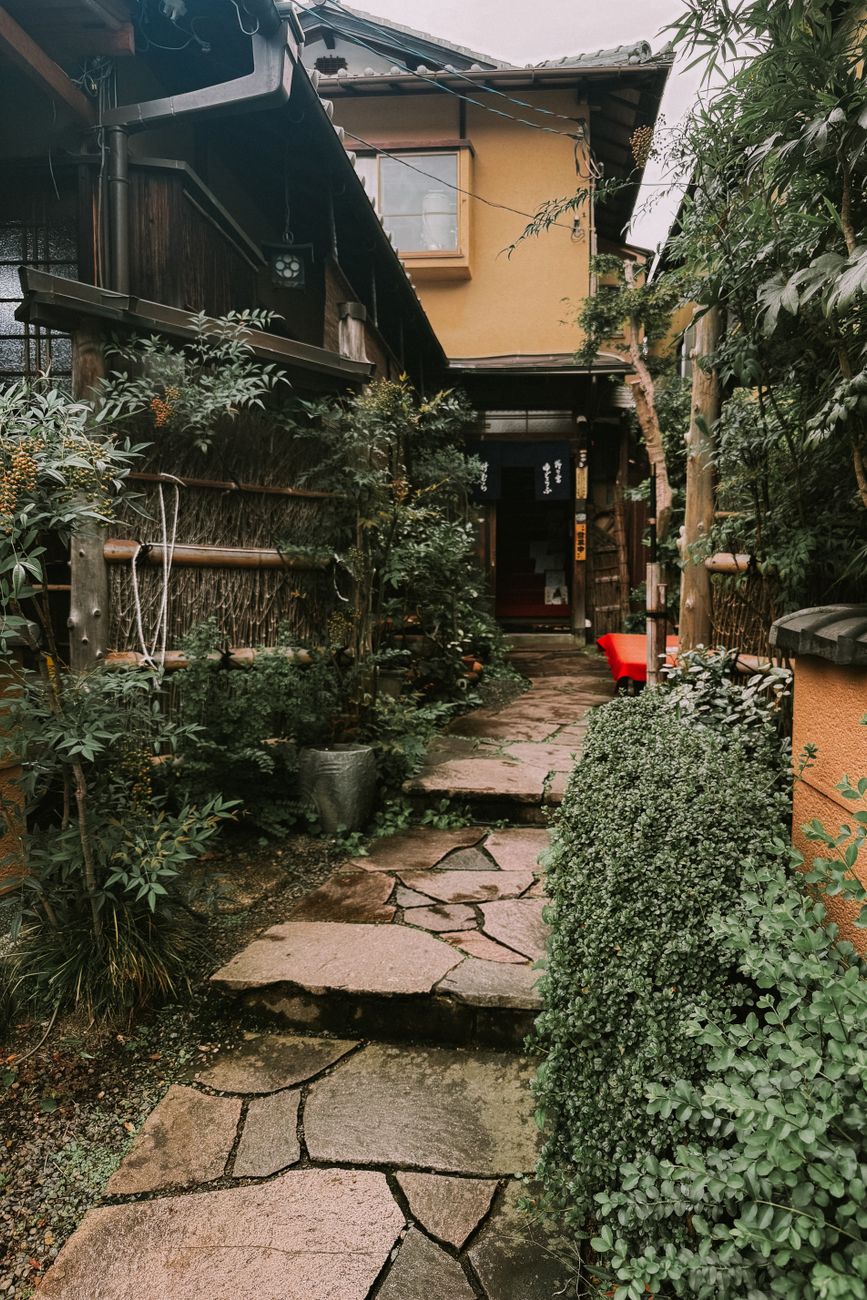
The Architecture of Silence: Traditional Machiya Residences
To step inside a restored Kyoto townhouse (machiya) is to experience a radical reduction of sensory noise. Built without nails using complex cedar and cypress mortise-and-tenon joints, these long structures act as acoustic filters against modern urban friction.
1. Joinery Without Nails
The carpenters of Kansai constructed machiya with flexible joints capable of riding seismic tremors without fracturing. Dark charred cedar siding (shou sugi ban) insulates the exterior against rain and pests while giving the alleys their characteristic somber dignity.
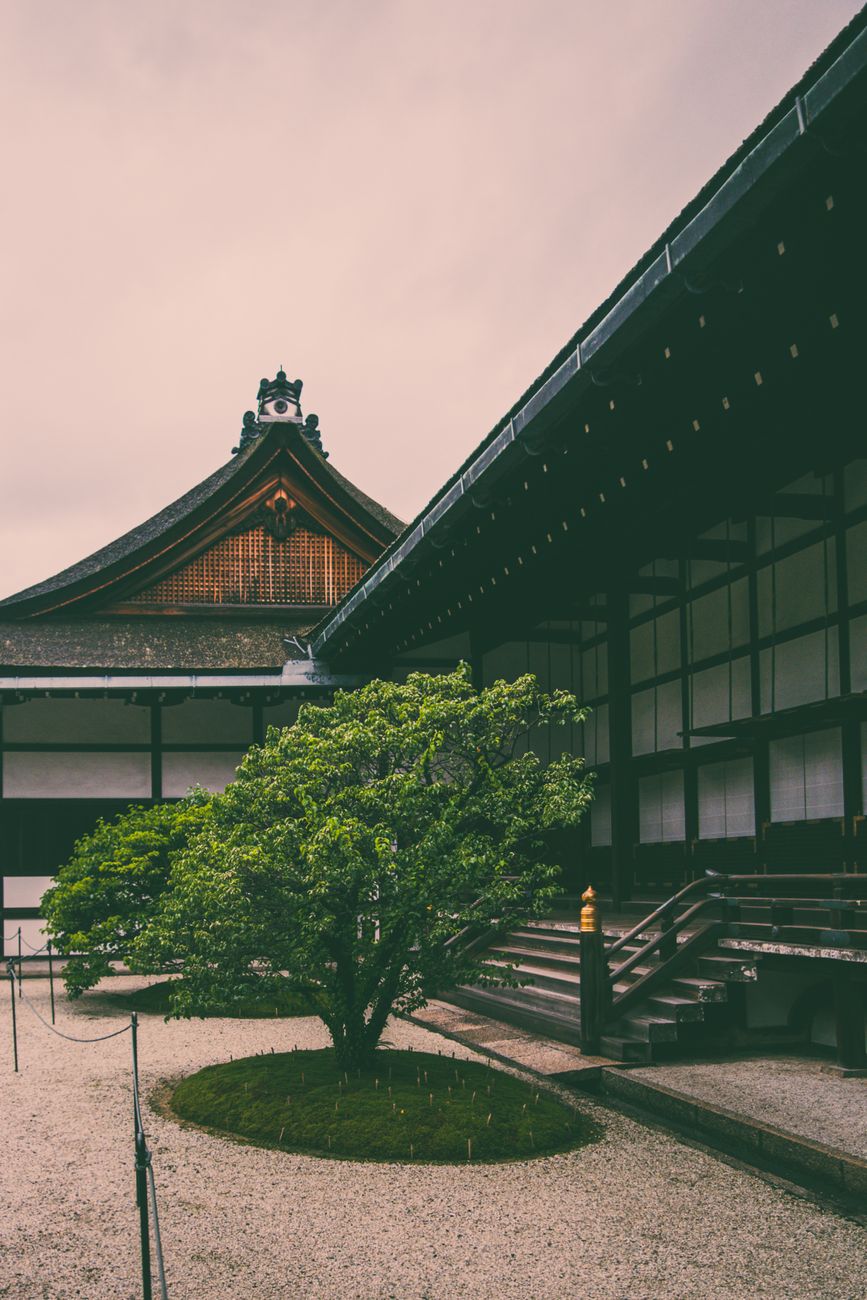
A pocket courtyard drawing soft light and humid breezes into living chambers.
2. The Tsuboniwa Garden
In the deep center of each machiya lies a miniature garden often no larger than two tatami mats. Containing a stone basin, moss-covered shale, and a solitary maple branch, this tsuboniwa functions as an air funnel pulling refreshing draft through sliding paper fusuma screens.
3. In Praise of Shadows
As Tanizaki noted in his classic essay, traditional Japanese craft finds its beauty not in blinding clarity but in subtle graduations of gloom. Paper shoji screens diffuse the noon sunlight into a warm, milky amber glow that calms the human heartbeat.
Experience Authentic Kyoto Stays
Access private preserved machiyas reserved exclusively for 111111 journal readers.
Request Access